
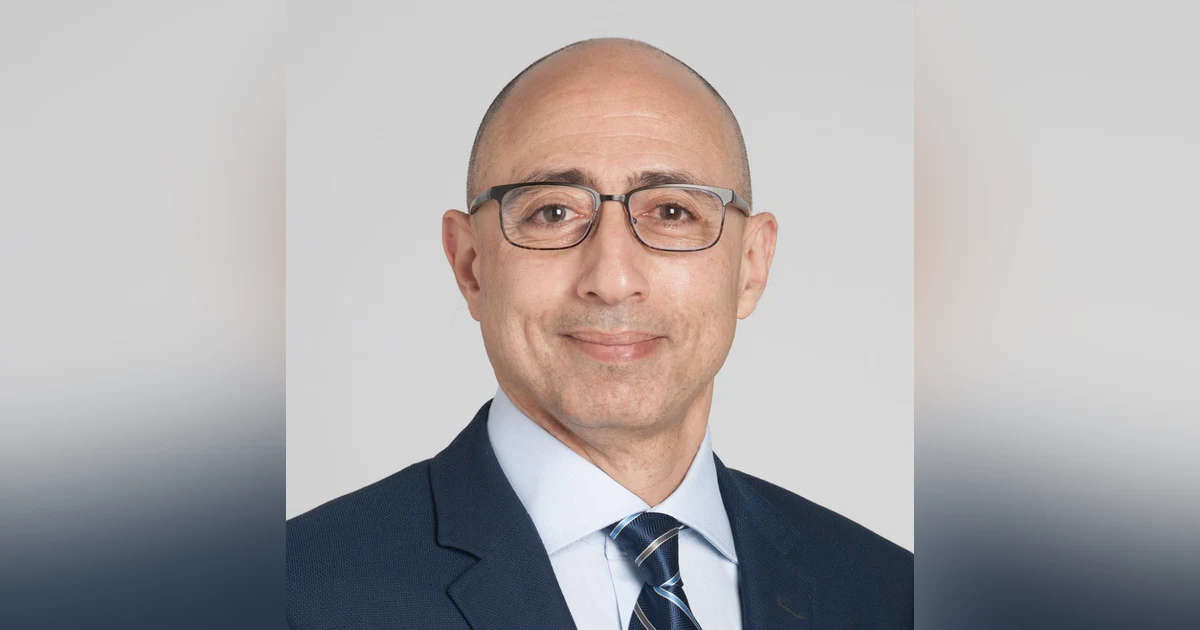
Episode 52: Microvascular Disease - Beyond the Bridge. Cleveland Clinic's Dr. Khaled Ziada explains.


 RSS Feed
 Can myocardial bridges be more than just incidental findings in cardiac diagnostics? Join us as we unravel this complex topic with Dr. Khaled Ziada from the Cleveland Clinic. You'll gain a deep understanding of how myocardial bridges, often dismissed as non-significant, can impact blood flow, especially when factors like endothelial dysfunction and coronary spasms are involved. Listen in to discover the pivotal role of provocative testing in determining when surgical intervention is truly necessary.
We discuss the complex techniques utilized in identifying and evaluating myocardial bridges. From CT scans to angiograms and intravascular ultrasounds, Dr. Ziada walks us through the tools that help pinpoint these bridges with a degree of precision. He also elaborates on the use of dobutamine provocation to assess arterial compression and simulate stress conditions, which can reveal underlying ischemic issues. This comprehensive diagnostic approach is crucial for tailoring surgical and medical treatment strategies to the unique needs of each patient.
Finally, we explore the often-underestimated challenges of treating endothelial dysfunction and microvascular disease post-surgery. Dr. Ziada emphasizes the importance of personalized medical therapies and lifestyle interventions in managing these conditions effectively. We also get a glimpse of the exceptional care model at Cleveland Clinic, where patients receive tailored support, whether through virtual or in-person consultations. Collaboration is vital between patients and physicians to enhance quality of life and stability in managing these intricate cardiac conditions and I found Dr. Ziada to have wonderful sense of concern for the well-being of those he works with.
You can learn more about the Cleveland clinic HERE.
You can email Dr. Ziada directly at ziadaK@ccf.org
Chapters
(00:00) Myocardial Bridges and Surgery Considerations
(06:36) Identification and Evaluation of Myocardial Bridges
(16:35) Endothelial Dysfunction and Medical Treatment
(28:33) Microvascular Dysfunction and Treatment Options
(35:02) Microvascular Dysfunction and Patient Care
Most of the studies or all the studies done on microbascular function testing were done on native arteries, not bypassing. Yes. Sometimes we, if the symptoms recur after unroofing, we may opt for one or two things. We either try to treat endothetic dysfunction and treat for spasm, because that's what wasn't treated by surgery. Or we can, if we want to be more targeted and more precise, we go back to the CAP lab and we repeat the studies.
SPEAKER_00It's my intention for this content to inform, educate, entertain, and even motivate or inspire you in your personal journey on dealing with a myocardial bridge. Most importantly is to have you leave each episode with hope, knowing you're not alone and that what you're experiencing is real. Just a quick reminder before we get started that the book is now available at Amazon.com, Imperfect Heart, Stories of Myocardial Bridges. Buy it for anybody who doubts that this condition is symptomatic. I'm excited to share our next guest with you as he's going to give us a little perspective on a topic I'm hearing more and more about, and that's recurring symptoms post-unroofing. Is there a way to better understand why this is happening? What can be done? Ours is a complex issue with every case unique and the condition dynamic or ever changing. The gentleman we get to hear from is with an organization we have never had a representative from, and that is the Cleveland Clinic. You're about to hear from a leader in interventional cardiology and a specialist in microvascular disease. Dr. Khaled Ziada is co-director of the Coronary Artery Disease Center and Chief Academic Officer for Cardiovascular Interventions in the section of invasive and interventional cardiology. He represents the most contemporary diagnostic testing for endothelial dysfunction, coronary vasospasm, myocardial bridging, and microvascular disease. He has performed more than 7,500 coronary and peripherally invasive procedures. He's participated in over 30 research studies, has been published in numerous research papers, and speaks Arabic in addition to English. I am honored he has taken the time from his incredibly busy schedule to speak with us. A friend to the Imperfect Heart community, Dr. Khaled Zayada, welcome to Imperfect Heart.
SPEAKER_01Thank you very much, Jeff. It's a pleasure to be here.
SPEAKER_00We are honored because you're also the first guest that we've had from Cleveland Clinic, and you are one of the premier institutions for interventional cardiology and certainly with myocardial bridges and now microvascular disease as well. So we are really anxious to hear what you've got to say.
unknownDr.
SPEAKER_00Ziata, we've had several episodes where we've discussed the nature of the role of the interventional cardiologist and how significant the process is in proper diagnosis. The one thing that appears that's happening is that patients are forgoing uh the provocative testing. They get the diagnosis through a CT angiogram, they can identify they've got the bridge, and even surgeons are performing the surgery. But unfortunately they're coming out with less than significant results, I should say, and in some cases subpar results. And the expectation was much higher. They still have symptoms, and they grow concerned. As we're recognizing now, we know more about the nature of blood flow and routing in our hearts, and the more likely we are to find the true cause of the problems through the provocative test. The bridge may only be a part of it, and in some cases, maybe not even the culprit. Can you give us your thoughts on that?
SPEAKER_01Yes, of course. It's I'm happy to do that. And you pointed out this is an important subject. Myocaria bridges are very common, yet only a very small fraction of them are really hemorrhagically significant and can cause symptoms. So for the majority of time, when we see bridges, they are what we call bystander findings, meaning they're there, but they're not causing any problem. But we today are talking about the ones that are causing problems and causing symptoms and affecting blood flow. And bridges can affect blood flow in more than one way. So I think this is what you were alluding to that this is a bit of a complex issue. It is not an automatic or a straight line from finding a bridge to operating on a bridge to getting rid of symptoms. Unfortunately, it is not that straightforward. So bridges can cause symptoms in multiple ways. Let's step back and think about why is there a bridge? There is a bridge because there is some developmental anomaly in which the coronary artery and the myocardium develop together while in the embryo, and the coronary artery develops on the surface of the myocardium. But for some reason, the in this case, the coronary artery channel or lumen developed within the myocardium, or some myocardial tissue developed around it. And that means that the artery is now encased in myocardium, partially or completely, but within some pressure or some encasement of myocardium. What that does mean to us is that the development of that segment of the artery is slightly different. And so the endothelial function or the endothelium or the lining of the artery and all the wall layers of the artery are slightly different and not perfectly normal. That becomes important in the development or in the subsequent phases because we realize that the issue is not just the geographic location of that segment within the myocardium, but it's actually the nature of that artery itself. So, what that means is that the when we do myocardial bridge surgery, which is basically releasing the artery from that encasement, we take that artery from within the myocardium to the surface of the myocardium, where it's supposed to be. So no pressure, no compression on the artery when the heart is contracted. However, we have not changed what's inside the artery. We have not changed the layers of the wall of the artery. We have not changed what we call the endothelial function of the artery. So some patients with mycarabridges have endothelial dysfunction and have a much higher tendency to have coronary spasm. And that may in fact be the primary reason why they're having chest pains or having symptoms. It could be that in some bridges the spasm is much more relevant to their symptoms than decompression. And it could be that some bridges have only compression that's causing the problem and very minimal effect of endothelial function. And so it could also be relevant where the bridge is, how many branches are coming out of this bridge, how deep is the bridge. So a number of things, how long is the bridge, so a number of factors come into play as to the significance of that bridge and what is the likelihood that that specific bridge and that specific patient is causing the symptoms. So that's what we are trying to advocate for is that we need to study these bridges in full detail before we do surgery on them. And the reason for that is that if we study them in detail, we will probably be able to identify the ones who will benefit the most and the ones who will benefit the least from surgery. And if we identify those, then we will one is set the expectations correct. As you pointed out, there's an expectation issue. And then the second thing is obviously only treat the patients who we think are going to benefit. After all, you know, whether it's minimally invasive or not minimally invasive, it's still heart surgery. So it's still something that we need to approach with with caution and with you know full attention to detail.
SPEAKER_00Yeah, surely we're working on somebody's heart. There's nothing to be taken lightly in consideration, even though it it's a relatively simple procedure in some ways, but the significance of it is it's your heart. And that's right.
SPEAKER_01And I would I would maybe make a comment on what you said about simple procedure. It is simple, but it needs to be very precise. So it is not something that most surgeons do. And so it is important to have some experience in how to do this and what are the important steps and important potential mistakes that one can make so that the surgeon can avoid them. And that comes with some degree of experience. So I think it's it's important when we talk about referring a patient to have rich surgery, is to make sure that the surgeon that we work with have some degree of experience.
SPEAKER_00Well, and you mentioned something else too, in terms of the actual testing procedure, what is revealed in the test is branched arteries that could be being compressed. You know, specifically the endothelial challenges, which may be a greater significance than actually the hemodynamic compression of the heart. So we've got all these uh things that are are significant in part that come from the testing procedure and help uh the interventional cardiologist like yourself, as well as the identification of what the surgeon is going to do if in fact there is going to be a recommendation to surgery. And many of the people who are listening they've heard now several iterations of the significance of the provocative test. But I think what they haven't heard is all these variances of the revelation from the test. Is it endothelial dysfunction? Are are you severe endothelial dysfunction? Is the compression significant? Are you blocking 100% on compression or compounding all of that at you know at one point in time? A spasm, a compression, and I would imagine that is ischemia for sure. But beyond that, now that we get past the identification of the endothelial function, the identification of the significance of the compression depending on where that artery is, or arteries, down to the next step, and that's the the microvascular side of it, which could also be an issue and in some cases the issue, correct?
SPEAKER_01Correct. You are correct. So the tests, so they are actually, when we say provocative testing or microvascular testing, we're actually talking about a series of tests that are done at the same time or one after the other during the procedure. They may be separate tests, but in combination, they answer all the questions that you just alluded to. So the first thing is we identify is there a bridge or not. You can know that from CT, as you mentioned earlier. Sometimes you don't have a CT, and you can identify that on the basis of the angiogram. When you see the compression of the artery with the cardiac cycle, with the contraction, and then the artery being released a little bit with the relaxation, and then you see this over and over, and you realize this segment of the artery may be intramyocartic. But sometimes it's not that easy to see. And so it's important sometimes, or many times, or almost all the time in these cases, is we use intravascular imaging. And specifically, we use intravascular ultrasound to identify where the bridge is so that the intramyocardial segment has a specific look to it. There is a halo of heart muscle over it. The artery itself seems to be restricted or compressed. Its motion is not just relaxation contraction, but seems to be wobbling a little bit because the heart really doesn't contract in press, unpressed, press, unpressed. There's a bit of torsion with the contraction. So to squeeze the blood out of the mycorrhia, out of the ventricle. So and so you can sometimes see that wobbling in the in the motion of the of the artery in the intramycoral segment. And so you identify that there is a bridge, pretty much more accurately, or most accurately, with intravasperal ultrasound. Now, beyond that, you start looking at, okay, how long is it? You can see the segment of the artery that is dipping inside the heart muscle. You can see the artery in the heart muscle, and then you can see it come out of the heart muscle. So you can define actually the length of it. You can then decide or identify where is that. Is it the proximal part, the topmost part of the artery? Is it the apical part, the way farther down the artery or is it in the middle? You can identify how many branches are coming off that segment because the branches are affected, and the degree of ischemia caused by the compression is affected by the number of branches. The branches are also important for the surgeon to know where the bridge is, because when they go in inside the chest, they need some landmarks. So if you tell them it's two millimeters downstream from the right branch or three millimeters above that other branch, then they know where to look.
SPEAKER_00Okay.
SPEAKER_01That's another thing. The third thing is the depth. The deeper the artery inside the muscle, the more likely more likely that it's causing compression in ischemia. So you want to measure that as well. And all these things can be relayed to the surgeons if we decide that's what we want to do, to help them decide where to go, how how much to cut and over the artery and how long and so forth. So that's one part of it, is identifying that there is a break. Then the next thing is to measure the degree of compression. And for that, we use what we call doutamine provocation or do butamine stress. So the idea is do butamine is a chemical that is chemically related to adrenaline or norepinephrine, epinephrine or norepinephrine, the same, you know, carapolamines. And the butamine is more selective on the heart receptor. So it makes the heart contract harder and it makes the heart contract faster. So we start infusing the butamine after we put a pressure wire across the bridge. So the pressure wire allows us to measure the pressure upstream and downstream. In the resting state, frequently you don't see any change or any drop in the pressure because the compression in the resting state typically is not very severe. Sometimes it is, but for the most part, it's not very severe. When you start stimulating the myocardium, which is kind of what happens with exercise, with activity, with climbing stairs, with running, with you know, carrying heavy things, with even getting emotionally stressed. That's what happens. Your heart rate goes up, and maybe your contractility becomes a little bit strong. So then the bridge becomes more compressive. And so we start seeing a change in pressure between the upstream pressure and the downstream pressure. And the degree of change and how far the pressures separate tells us how significant that bridge is. We also look at at what heart rate do we see the separation? At what blood pressure do we see the separation? Obviously, if that separation happens when your heart rate is 70 or 80, it means that this can happen to you every day with minimal activity. If it only happens when your heart rate is 150 or 170, it probably means that that happens when you are, you know, in exercising to a very high degree. So it would all these things come into play as to understanding the compression and the hemodynamic significance of it. We also, after that, test for what we call microvascular function. So we use adenosine, not debutamine. And what that does is that it opens up the microcirculation downstream from the bridge. And that allows us to make sure that the microcirculation downstream, is it healthy? Is it not healthy? Does the microcirculation is it able to dilate and allow the flow to increase with stress or not? Because if it dilates and opens up nicely with stress, that means that fixing the bridge will lead to symptomatic improvement. But if the problem, if there is a problem with microcirculation, that means fixing the bridge may be partially helpful and may not be helpful at all because the problem may lie somewhere else. And so it's important to know that the microcirculation is not the problem or is not the cause of symptoms. And then the other thing which you mentioned multiple times, which is provocative testing. Provocative testing means, typically means, in this case, we use two kinds of provocate provocation, the dubutamine, which I mentioned, but also use the typical provocative testing for spath. In our lab and in most labs, I think, we use acetylcholine, which is an agent that we inject into the coronary artery and we see the response of the coronary artery to that injection. The acetylcholine can induce coronary spath in patients who are susceptible to it. And we know that the acetylcholine molecules work through endothelial receptors. They don't interact with the heart muscle, with the vascular muscle directly, they work through endothelial receptors. And so when there is endothelial dysfunction, the acetylcholine can actually cause spasm. And when there is normal endothelium, the acetylcholine causes no spasm or even some vasodilation. So when we inject acetylcholine, we typically see that the segment intramyocardial, the brick segment, starts to constrict, stress to spasm. Because we know that this segment is most likely dysfunctional when it comes to the endothelium or the inner lining of it. And depending on the degree of that, is it severe? Is it 90% block? Does the patient feel the spasm? Do the patients have chest pain while we're doing this? We have BKG connected. Is the EKG showing evidence of ischemia? So all these parts of the provocative study tell us how significant is the spasm. If the spasm is very severe, if the microcirculation is impaired, these things tell us that the improvement after surgery is partial. Or maybe if the compression is not severe and the spasm is the severe thing or the severe problem, maybe this patient shouldn't go to surgery because decompressing the artery is not going to help. It's the medications to treat spasm that are needed.
SPEAKER_00That's exactly the question I was going to ask you.
SPEAKER_01Right. And so we may find cases in which we don't need to send somebody to surgery because we've identified that the cause of the chest pain is something else other than compression. So remember, unroofing really releases or relieves the compression. But it doesn't do much for the microcirculation, it doesn't do much for the endothelial function. I will put a little bit of a caveat there is that we have, I've seen some patients in whom the spasm improves after unroofing. And we have some hypotheses as to why that is, and we're trying to collect a number of patients that way to try to study them and report on that. But that's a sort of a secondary issue. Primarily, the unroofing is a treatment for compression, not for spasm. And at the least, as you said earlier, at the least we just set the expectations right.
SPEAKER_00Some people will have their symptoms recur over time. In other words, they're symptom-free for some period, maybe a year, two years, three years. Why is it that the symptoms might manifest themselves after some time post-surgery?
SPEAKER_01I don't think the bridge grows back. I think if there is growth over the uh part of the artery that has been released, that growth is growth of scar tissue, not muscle. So I don't think it's a matter of reformation of the bridge. I think it might be progression of endothelial dysfunction.
SPEAKER_00So the process to relieve the compression doesn't necessarily heal if you have endothelial dysfunction, it doesn't necessarily heal the endothelial dysfunction. That could still progress. Okay.
SPEAKER_01And that's where medical therapy is needed, where you want to treat with medications that prevent spasm, that control spasm, medications that maybe improve endothelial health over time.
SPEAKER_00You know, a compression issue that was identified or a a blockage at the point of entry, which is is common. It's common. That bypass then is now running through an artery that never had endothelial dysfunction. But is it still possible but the existing, the original LAD that still has some flow could cause you problems?
SPEAKER_01Less likely so. So when the bridges are very severe and compressing so much that sometimes we even get that pressure gradient I was telling you about, that drop in pressure, even at rest, or with very minimal debutamine stimulation. In these cases, and in the cases in which you mentioned when there is an obstruction at the mouth of the bridge, which is also not a rare thing.
SPEAKER_00Yes.
SPEAKER_01If that obstruction is severe enough, in those cases, a bypass is reasonable. We generally do both unroofing plus bypass at our center. And we think that there is something to be said about the degree of compression and the triggering of spasm that can cause, be caused by the compression. And so we think that unroofing plus bypass is better than bypass alone, although I don't think we have all the data to support that, just based on some on some of our local experience. If you have a bypass, you're much, much less likely to be affected by the native LED upstream from the bypass. That's not going to be an issue for the most part. What you may have is endothelial dysfunction that is still there downstream. You may have microvascular disease that is with high resistance to flow still downstream. So you may have fixed a part of the problem, which is the large vessel problem, but you haven't fixed the micro, the problem on the micro level. So this may be another explanation why symptoms can persist or symptoms can recur after some time.
SPEAKER_00Okay, so that is a symptom and a situation, this this endothelial dysfunction that could deteriorate over time.
SPEAKER_01Absolutely.
SPEAKER_00Okay, and and having nothing to do with the compression of the bridge.
SPEAKER_01No, because we we were saying that the compression has been relieved by the unroofing. So yeah, so what is more likely to happen over time is progression of endothelial.
SPEAKER_00Oh, I'm so happy to hear that because I think that answers questions for a lot of people. And then they know that's that's treatment medically.
SPEAKER_01Correct.
SPEAKER_00And something they would have to do. If somebody does have their symptoms recur, and the suspicion is that it could be microvascular, does that then necessitate another provocative test?
SPEAKER_01Yeah. It gets a little trickier there.
SPEAKER_00Okay.
SPEAKER_01And the reason I say that is because if they don't have if they don't have a bypass, yes, we can repeat the micro the provocative testing, and we can repeat the microvascular testing, and we can repeat all the tests that I mentioned earlier: the ultrasound, the microvascular function, the debutamy, we can repeat all that. If they do have a bypass, it gets complicated because we don't know for sure what the cutoffs and the normal values would be in the presence of a bypass. Most of the studies or all the studies done on microvascular function testing were done on native arteries, not bypass tests. So that's one thing. The second thing is yes, sometimes we, if the symptoms recur after unroofing, we the first thing we think about is endothelial dysfunction. And so we may opt for one or two things. We either try to treat endothelial dysfunction and treat for spasm, because that's what wasn't treated by surgery, or we can, if we want to be more targeted and more precise, we go back to the CAT lab and we repeat the studies, as you said.
SPEAKER_00Provocative test. Can it be done on a bypassed artery?
SPEAKER_01Yeah, it can be. It's just that it depends on the degree of disease. And sometimes if you have severe enough disease, most arteries will have endothelial dysfunction with severe enough disease, and most arteries will have some degree of spasm. So if the artery is significantly diseased, I would say the result of the test becomes more nonspecific.
SPEAKER_00Is it possible? And I I've not had this question, I have not asked this question of any of the surgeons or cardiologists that we've spoken with. Endothelial dysfunction, can it be severe enough to cause sudden cardiac arrest?
SPEAKER_01Okay, so that's a good question. So coronary spasm has been known to cause ventricular arrhythmia and cardiac gut. And as we mentioned, these patients have a higher tendency to develop coronary spasm. And so the yes and no answer to your question is yes, it can. The a little bit more nuanced answer is it's very unlikely, it's very rare. And I don't want to be, you know, I don't want to be too sensational here.
SPEAKER_00Alarmist, correct.
SPEAKER_01Yeah, it is not likely, but yes, it has been reported to be fully transparent.
SPEAKER_00Okay, and and good to share because people can be aware that it's it's it's very unlikely and that they can be treated medically.
SPEAKER_02Correct.
SPEAKER_00So once we've confirmed that a patient's most likely suffering from something that's microvascular disease or dysfunction, what are the next steps?
SPEAKER_01Yeah, so if the issue is microvascular disease or microvascular dysfunction, then the next steps would be medical management and non, you know, both pharmacologic and non-pharmacologic management. So at this point, we will try to move away from surgery because then our logic would be surgery may relieve compression. Compression is probably not the big player here or not the culprit for these symptoms. So let's avoid the risk of surgery because we don't think it's gonna help. Let's focus on the things that may help. So we think of conservative therapy or medical therapy, I mean, as pharmacologic or non-pharmacologic. Non-pharmacologic things are exercise, regular exercise, good diet, weight management. Really important weight loss is really important for people who are overweight, is really, really of great value. And we see that clinically all the time. Symptoms do get better as as we lose weight and get in in good shape, physically good shape. And then we manage all the issues that these patients have as far as high cholesterol. You need to get a statin and drop their cholesterol aggressively. High blood pressure, not allowed. We need to control the blood pressure. If we have to use one or two or three medications, we need to do that. Diabetes, same thing. Smoking is a big no-no. So we we manage the risk factors. And then for the specific medical therapy, we will look at the endotype a little bit. So if we have uh epicardial spasm, we will focus on calcive channel blockers like diltesm and verapomil, and we can also use nitrates. If we have microvascular spasm, I prefer to use a beta blocker. If we have just the simple non-endot-dependent microvascular dysfunction, I use also a beta blocker and maybe a sodium channel blocker like granolase. So it depends on the endotype. And you know, we know from Cormaca and in other studies that when we identify the endotype, we're actually more effective.
SPEAKER_00And Dr. Ziata, you mentioned something that I hadn't thought of, but in the process of identifying the microvascular dysfunction as one part of the disease, you can also have microvascular spasms as well.
SPEAKER_01Yeah. So microvascular spasm is is a term we use for what we call for evidence of endothelial independent microvascular dysfunction. So what that means is is that when we inject acetylcholine, there are three things that can happen in a patient who is susceptible to spasm. One is that they have spasm, that we see spasm on the screen, the big arteries constrict. Two is that they have chest pain. And three is that their EKG shows signs of ischemia. When you have spasm on the screen, meaning the large vessel constricts, and when we say constrict, we mean very, very severe. We call it more than 90% constriction before we actually label that as vasospastic. That obviously is vasospastic. We got the diagnosis there, it's large vessel spasm. But sometimes when we see the patient having symptoms, chest pressure, chest pain, sometimes even they say that's how I feel at home. That's exactly how I feel when I go up the stairs, something like that. And we see ATG changes. What that tells us is that acetylcholine is doing something, but we can't see it. So it must be doing it on a micro level. So that's why we call it microvascular spasm.
SPEAKER_00I see.
SPEAKER_01In essence, it's the better term, but it's a mouthful, so that's why we don't use it all the time, is endothelial-dependent microvascular dysfunction.
SPEAKER_00Well, you did a very good job getting that out. I had to take catch my breath first and then is microvascular disease something that deteriorates over time, assuming the patient is taking good care of themselves. Obviously, if they're not, we would expect a deterioration. But if they're managing their health as you expect and keeping the weight down and exercising, does the microvascular dysfunction then maintain or does it deteriorate regardless?
SPEAKER_01I think it doesn't have to deteriorate regardless. But I would not be honest if I say that you can make it go away. So when patients ask me that question, I usually tell them it's like high blood pressure or diabetes. You take the medicine and you keep the symptoms at bay and you try to do the best things possible for the health of the endothelium and the microvascular structures, and then it would be hopefully stay the same and maybe the symptoms will be under control. But I can't tell a patient with high blood pressure or diabetes that the medicine I'm giving them is curing them from the condition. So this one is about the same thing.
SPEAKER_00Sure. And it's it's likely that if you have this condition, doing nothing is it's not going to heal in any way, shape, or form. It's not going to change.
SPEAKER_01It's not. And it's doing nothing, meaning not taking care of good care of yourself, whether pharmacologically or non-pharmacologically can make it can make things worse.
SPEAKER_00In terms of somebody who has had the unroofing procedure, they let's say they didn't have any severe endothelial dysfunction. The the compression was actually causing a problem, but they also did have a microvascular issue, but everything stopped on the unroofing. So obviously they're still presenting with problems, but we know that the hemodynamic issue of the LAD is fine. Now we know it's a microvascular situation. What happens for those people? How what should they do?
SPEAKER_01Yeah, so if there is doubt about what the cause of the problem is, we can retest, like you mentioned earlier, and we can test through unroof's arteries. That's not a problem. We've done that a few times. What they should do would be to, you know, focus on the microvascular dysfunction as a medical issue, meaning exercise, weight loss, good diet, take the medications. Sometimes the medications, it's a little frustrating because there is no one recipe for microvascular dysfunction. We have to individualize the therapy and the combination of things that we use for every patient. And so it takes a little bit of time, but eventually I tell everybody almost all of my patients feel better. Not all of them, but almost all. Very small fraction of patients we hail to control their symptoms. Some patients feel a little bit better, some patients feel great, but almost everybody feels better to some extent. So we work on that and we get them to feel better and we get them to be able to do the things they want to do on medical therapy.
SPEAKER_00Which is excellent. That's great to hear. And quality of life is so important. If we can take it from 30 to 70, that's huge. That's a that's a big difference.
SPEAKER_01Correct. And it's a partnership. And so your listeners, if they are, you know, in this, if they had microbascular dysfunction and they have a physician that they've been working with, you know that this is a relationship, and it's there's a lot of back and forth whether you're focusing on how to get them to do the things they want to do.
SPEAKER_00Yes.
SPEAKER_01So it's not what I care about, it's what the patient cares about. If they want to run, if they want to, you know, go to Alaska, if they want to do this or that, it is sort of my mission to try to make that happen. May not always be able to, but at least I try to do that. And then the other thing is we manage the medications. Lots of things that to do with that. The efficacy of them, are they working? Are they not working? Side effects, are they side effects tolerable? Are they not tolerable? Sometimes even now we worry about cost. Can we find something that's cheaper? Can we find something that does the same thing? I mean, we have to get into this relationship where we cover all the basis.
SPEAKER_00One of the things that comes up, and people have enjoyed when I ask the surgeon, interventional cardiologist, cardiologists that we speak with is something a little bit personal. I mean, you have a highly, highly stressful situation. It is life and death, and you're in our hearts all day long. What is it you do to relax? How do you take a break from the intensity of the role at Cleveland Clinic?
SPEAKER_01Okay, so I exercise, so that's one thing. And I'm a big crazy soccer fan.
SPEAKER_00Ah.
SPEAKER_01So I I used to play, but I don't play anymore because I I hurt my back. But I I watch a lot of soccer. I travel to watch soccer. I go to Europe to watch soccer, I go to the World Cup. I do all the things that you know the crazy soccer fans do.
SPEAKER_00You know, be careful now. I don't hear those crazy soccer fans.
SPEAKER_01They they mash each other and yeah, I I try not to get into those, but but it's something that it's one of my the things where I I sort of block out and just enjoy the game like everybody else who who does it does enjoy the game. I watch a lot of sports, but but soccer is is my thing.
SPEAKER_00Is there anything that you would like to leave our listeners with before we conclude? And we really don't know much about Cleveland Clinic because I haven't spoken to anybody from Cleveland Clinic yet. Maybe share a little bit more of the operation and the significance of what you do.
SPEAKER_01Yeah, I'm happy to do that. For your listeners, I think it's important to know that we are here for you. We have a lot of resources, we have all the testing that is needed. We have great surgeons, some maybe at least three or four, have great experience in in bridge surgery. We pride ourselves on running a very coordinated and comprehensive operation. So when patients come to us, we take care of everything from the medical side, from the surgical side, from the coordination, from the testing, all that if that is needed. We do a lot of second opinions and a lot of third opinions, even. Oh, I'm great to hear that's a good role to have. Sometimes, especially these issues like my vertebra bridges, microvascular disease, the care may not be available to everybody everywhere. And so we're happy to do that. We do that sometimes virtually, sometimes in person, depending on the on the exact needs. My group here is an interventional group, I do a lot of microvasculate testing. A few of my partners do some uh to help me. We take care of our patients directly. Uh, the model changes from one phase to another. Some centers, the interventional cardiologist does the testing, but the medical care is is taken over by uh clinical cardiologists. We don't have that. It's just you get one doctor who takes care of everything as far as we're concerned with the with microvascular and bridge testing. And we offer Midwestern hospitality. We're generally easygoing. We don't have big egos and and big problems. We we like to see patients, we like to help patients, and so hopefully we're able to help as many people as we can.
SPEAKER_00You certainly were one of the institutions that was referred as I started my process. You were just in Cleveland and I happened to be in California. Stanford was closer. However, we do know of a famous name who happened to be our governor who went to Cleveland Clinic to have his heartwork done. So Arnold Schwarzenegger, and I would say there's an ego there, but he chose Cleveland Clinic his work.
SPEAKER_01He came here and he's he's very popular here. He he won a lot of a lot of hearts here. Now he was just he was just being very nice and gracious when he was here as a patient. And he still sent thank you cards every year to the team and they post it up on their wall. And so, you know, he's he's been very nice to to the clinic, and hopefully he's doing well. I think he is doing well.
SPEAKER_00It seems like I know he's working on another movie at this point.
SPEAKER_01Well, that that's a good sign.
SPEAKER_00Yes, yes. So, what would be the next steps if somebody's interested in getting touch getting in touch with you to either get a second opinion or just originate a conversation?
SPEAKER_01So you can find me at the on the Cleveland Clinic website. You can use my email. I don't know if you can post my email.
SPEAKER_00I'll stick it in the show notes, yes.
SPEAKER_01I'm happy to answer emails. That's probably the best way to get me is through email. And we do have on the website at the Cleveland Clinic website, we do have a process for virtual second opinion, we have a process for getting appointments and so forth, but maybe uh sort of an informal or way is or uh probably the fastest way is the email.
SPEAKER_00Okay, fantastic. And I would expect that you're gonna hear some things. You might even get some soccer fans who are gonna reach out and and see who your favorite teams are.
SPEAKER_01I'm happy to get in that conversation too.
SPEAKER_00I'll bet you would be. You guys are rabbit, it's like our football fans.
SPEAKER_01That's right.
SPEAKER_00Well, Dr. Ziata, this has been such an informative discussion, and it's one that's been most necessary because we're starting to hear this microvascular dysfunction disease more and more and more as people are actually getting their provocative testing done. And so for any of us that have been unroofed, you know, we recognize the fear that we've got is we don't want this to come back. You know, we're we're happy that we we think we've alleved alleviated it, and and you've also helped us understand that it is possible it's endothelial dysfunction. And I think that's really helpful because many of us think, oh my gosh, is the bridge grown over it? Has the scar tissue grown? Has it made it compress again? Do we have to go through the surgery again? And in most cases, that's not going to be the situation. You know, for for what you do, for what the entire team at Cleveland Clinic does, I thank you from the bottom of my imperfect heart and really appreciate the conversation today. So thank you.
SPEAKER_01You are very welcome, Devman. It's my great honor and privilege to uh to talk to you today and to your uh to your listeners. And as I said, we are here to help, and that's our uh our pride and joy is to try to help patients and help people. So I welcome any contact, any second opinions, any informal chats. I'm I'm happy to be there for uh for all your listeners.
SPEAKER_00Excellent. Thank you. Thank you for listening to Imperfect Heart. It's my hope that this information helped in some way to improve your situation or will help you better understand this condition. More importantly, that it gives you hope through stories that there is help and you most certainly are not alone. If you've been diagnosed with a myocardial bridge, please be sure to join the private Facebook group, Myocardial Bridge Support Group. For more information about our program or to reach me directly, visit the website myimperfectheart.com. If you like what you heard today, please give a positive review, thumbs up, high five, whatever your app likes. And be sure to share with everyone important to you so they understand what it is you're dealing with. Please subscribe as well. Welcome each day with gratitude and positivity. Imperfect Heart is a production of Hear Me Now Studio.


