
Episode 62: Denied, Then Delivered: The Rest of Pete Furman's Story Post-Open Heart Surgery. How He MADE It Happen.
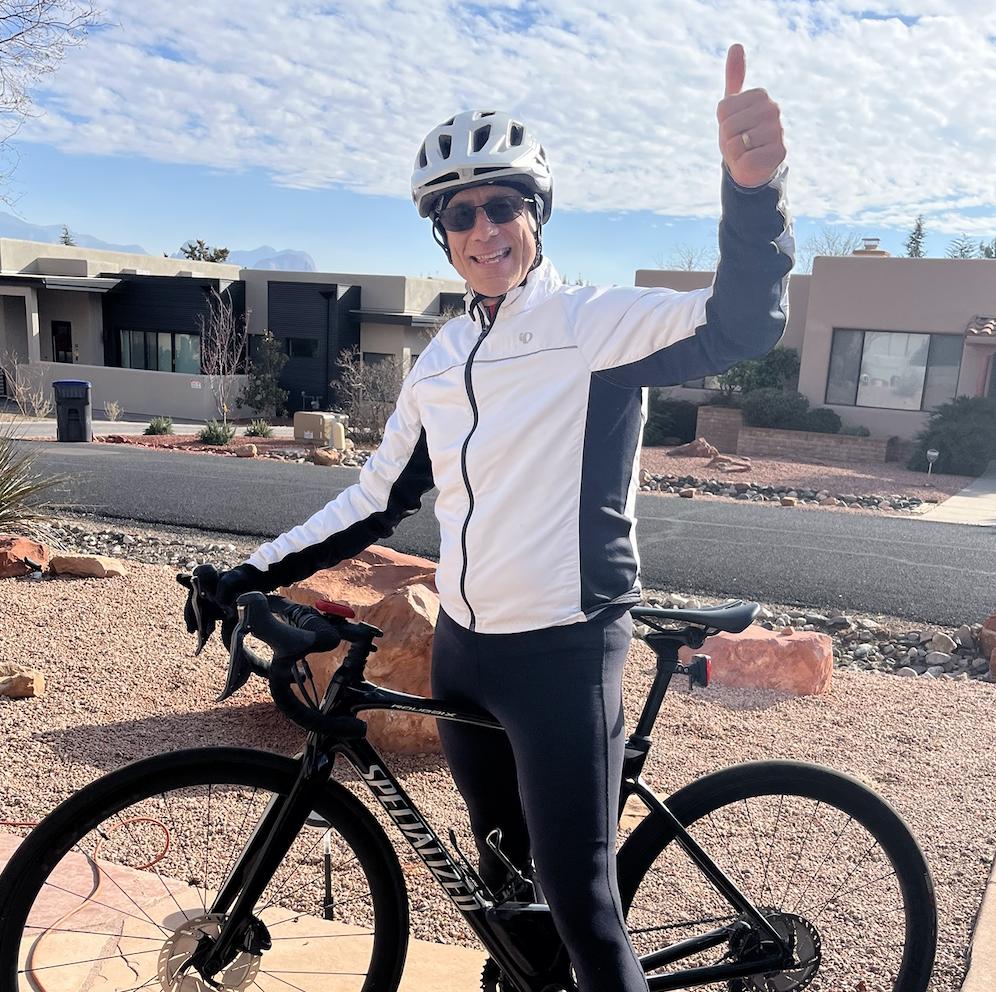


When I first spoke with Pete Furman in Episode 36, his health was failing, his options felt limited, and the road ahead was anything but clear. He was living with a myocardial bridge, drug therapy wasn’t working, and insurance had just denied his preferred surgeon. Everything felt urgent — and uncertain.
In this follow-up conversation, Pete returns to share what happened next.
We talk about how he navigated insurance denial, found a local cardiac surgeon willing to listen and learn, and ultimately underwent open-heart surgery to fully unroof his myocardial bridge. Pete walks us through the questions he asked, the promises he insisted on, and how self-advocacy became a matter of survival.
But this episode goes far beyond the operating room. Pete opens up about the emotional toll on his family, the anxiety leading up to surgery, and recording messages “just in case.” He also shares a surprising post-surgery discovery — that part of his ongoing struggle wasn’t his heart at all, but how he was breathing — and how retraining his body helped him reclaim strength he hadn’t felt in years.
Today, more than a year after surgery, Pete is back on his bike, training again, and setting his sights on racing in 2026.
If you’re facing a myocardial bridge diagnosis, wrestling with insurance, or wondering whether it’s possible to truly get your life back, this conversation is proof that it is — even when the path looks imperfect.
Pete's Doctor in Arizona was Dr. Modesto Colon with Phoenix Cardiac Surgery
Chapter Timestamps
00:00 – Welcome Back & Where Pete’s Story Left Off
Pete returns to Imperfect Heart and recaps his diagnosis, failed drug therapy, and the critical decisions he faced after Episode 36.
08:45 – Insurance Denial & Finding the Right Surgeon
How a denied robotic surgery led Pete to a local, in-network cardiac surgeon — and the questions that mattered most.
24:30 – The Surgery Decision: Sternotomy vs Robotic
Why Pete chose open-heart surgery, what “fully unroofing” meant to him, and the promises he required before saying yes.
41:10 – Fear, Family, and Facing the Unknown
The emotional weight of declining health, preparing his family, and recording messages “just in case.”
57:40 – Recovery, Setbacks, and a Surprising Breakthrough
Post-surgery struggles, breathing dysfunction, and how retraining his body changed everything.
1:15:20 – Life One Year Later: Riding, Racing, and Hope
Pete’s return to the bike, future goals, advice for others starting this journey, and why advocacy matters.
Peter Furman: [00:00:00] A year, what? A year and a month past my surgery. It really hit me this year about how thankful I am feeling about having, you know, health. So it's amazing. It's really a miracle. And I started seeing Strava performances that I haven't seen in six years, a year before. So this was just prior to my surgery.
I had to go sit down and the paramedics came out to check on me because I looked horrible and I felt horrible. A year later, I was standing there. Happy every day. We have as a gift
Jeff Holden: welcome to Imperfect Heart, a place for you to join me, Jeff Holden in conversations, discussions, and dialogue about our hearts and the impact myocardial bridges have on them. We will talk with healthcare professionals, [00:01:00] those in related fields that support our condition and others just like us with stories of their myocardial bridge experiences.
It's my intention for this content to inform, educate, entertain, and even motivate or inspire you in your personal journey on dealing with a myocardial bridge. Most importantly is to have you leave each episode with hope, knowing you're not alone. That what you are experiencing is real. Just a quick reminder before we get started that the book is now available@amazon.com, imperfect heart stories of myocardial bridges.
Buy it for anybody who doubts that this condition is symptomatic. When I first sat down with Pete Furman, an avid cyclist back in 2023 for one of our Journeys episodes, he'd just been diagnosed with a myocardial bridge. Drug therapy had failed him. Insurance was getting in the way of the care he wanted, and his health was sliding fast.
If you've [00:02:00] heard episode 36 or saw us on YouTube, you know that conversation ended in a place of uncertainty. Big decisions ahead. No guarantees. And that's where we left it until now. In this follow-up, we picked that story up on the other side of some enormous crossroads. Pete walks us through what happened after Blue Cross.
Blue Shield denied his preferred choice of surgeons, how he leaned into self-advocacy, and how he ultimately found a local cardiac surgeon who was willing to learn, listen, and fully commit to unroof his myocardial bridge. We talk about navigating insurance, asking hard questions, extracting clear promises, and making peace with an open heart sternotomy when the clock is ticking and your symptoms are getting worse by the day, and this isn't just a surgery story, it's a recovery story.
Pete shares the emotional reality of recording a just in case message for his wife. The fear of not knowing how it would all turn [00:03:00] out, and then the unexpected twist, discovering that part of what was holding him back after surgery wasn't his heart, but how he was breathing. With the help of an athletic focused cardiologist and a simple breathing device, he's now seeing performance on the bike he hasn't seen in six years, and is training with an eye toward racing again in 2026.
If you're wrestling with insurance barriers, wondering whether you can trust a local surgeon or afraid you'll never get your life back after a myocardial bridge diagnosis, this conversation is for you. Pete's story is proof that you can still find the right help, sometimes closer than you think, and that showing up for your own life even imperfectly can change everything.
Pete Furman, welcome back to Imperfect Heart.
Peter Furman: Thanks Jeff. It's an honor to be back and a privilege. The work that you do with art community is is [00:04:00] amazing. The fact that you've asked me to come back on again to update my story is a real gift, so thank you.
Jeff Holden: For those who haven't listened to episode 36 on the audio side or on YouTube by searching Pete Furman, when we spoke the first time you were in a real rough spot.
Walk us through briefly what was going on. Just give us a recap.
Peter Furman: Yeah, yeah. Thanks Jeff. July in 2023 was my first trip to the hospital with heart problems. You know, two years prior I was noticing issues, but July in 2023 was my first trip to the hospital, and I shared in our last talk that I was one of the lucky ones.
I was diagnosed with a myocardial bridge in that first trip to the hospital, and so I began the year of drug therapy that was. A horrible experience. Didn't do anything good, just got worse. And then [00:05:00] July, 2024, I had a, we're gonna call it a significant ischemia event. We don't wanna call it a heart attack, 'cause none of us wanna think about that.
But in retrospect now, it appears that it didn't do any permanent damage. There was some lasting ischemia in my septal wall. I appeared to come out of that. Okay, so after that event in July, October, I think you and I talked down, I, I made a note here. We talked August 28th. Mm-hmm. So I was a couple weeks away from meeting my proposed surgeon and two months away from my heart surgery, which was October 18th, 2020.
So it's just a year and a month now since my surgery.
Jeff Holden: And you went through a variety of iterations. You spoke with the people from Stanford and, and Schnier, and what was the outcome?
Peter Furman: Yeah, I mean, you know, talked to Kodi, I talked to Shaw, I talked to Schnier, I [00:06:00] talked to Guy and Henry and you know, after my.
Ischemic event in July of 2023, they all decided that it was surgery was needed for me. My myocardial regimen was significant enough that, and that I did respond to the drug surgery. So we needed, we needed the surgery and I scheduled it with Dr. Guy because I was interested in the robotic surgery and we got it scheduled and, and, uh, we went through the approval process and Blue Cross Blue Shield denied it.
Proposed that I see a local down of Phoenix cardiac surgeon, and you and I spoke and that was two weeks in front of meeting with him for the first time.
Jeff Holden: You took a really interesting route because when we had that conversation you said, Hey, I'm under the belief from a few of the doctors that you've spoken with, that if somebody does a fair number of bypass surgeries, they probably have encountered.
[00:07:00] Some semblance of bridging to the LAD in order to do the bypass. And the suggestion was if you have to do this on your own and you can't find a surgeon that is familiar or has done several of the UN roofing procedures that find a guy or a gal, or a woman or a doctor who does the. Bypass surgeries. Who, who's done a good number of those because they will have experienced something and I think that's what you did.
Yes.
Peter Furman: Yeah, kinda like that. I would say that maybe bypass isn't enough. Speaking to Shaw and to Guy and, and people I have, and I'm still under the belief that that surgery itself is not technically that complicated. Mm-hmm. And a cardiac surgeon that's doing the valve replacements and the heart transplants.
So it's more than just the, the bypasses. I think my, [00:08:00] you know, when I was initially diagnosed, you know, they were going in there to think about a stent. The cardiologist, of course, he's an interventionalist, not a surgeon, and he saw the bridge and decided not to stand. He knew that much and, and said, you gotta find a specialist.
But I, I think a good, a very good, experienced, broadly experienced cardiac surgeon can do this work.
Jeff Holden: So you, you found your local in system. Acceptable for insurance, cardiologist. And it wasn't just a meeting you had with him, as I recall. You walked him through every step of the way in detail with documentation and, and information.
I think you shared some of the podcasts where we've got some, some detail from the doctors. Tell us a little bit about what you did for the benefit others for the benefit of others [00:09:00] who will. Have to go to the same route.
Peter Furman: Yeah. So. It was Blue Cross Blue Shield that suggested this person and I reached out to his office and scheduled a consult, and that's when you know, right, you and I spoke.
And then two weeks later, I went down to the consult
Jeff Holden: Uhhuh.
Peter Furman: So before going down there, I emailed him or sent it to his system, links to some of the technical articles from the website, from the Mount Crowd bridge.net website. Those resources in there are great. Resources and everyone should read every one of those articles.
They're really amazing resources. But I think I picked two of them and I sent those down to him. And then my wife and I showed up in his office, and I'll tell you what Jeff, you know, I really lucked out. This guy was confident but humble. He had a sense of humor, but he was serious. He saw that I had my list of questions.
He'd said he read those articles that I sent him. He [00:10:00] said, Hey, this is your meeting. Why don't you ask your questions? And so I ri rattled through my list of questions with him and he answered everyone in detail, you know, with humor. But then when it wasn't appropriate, not when Lisa asked him a question, he looked at her and talk to her.
And I just got an amazing, it was like the best doctor consult, visit. I think we spent an hour together. He didn't, he didn't express time pressure with us, and he just did a tremendous job. My questions were all about, you know, how are you gonna go in there? We need to fully unroof the, the bridges. What does that mean to you and how are you going to start this thing?
Stanford has a very specific approach for locating the bridges. What are you gonna do? His approach was very much like Dr. Guy. He wanted to start at the apex of my heart, which is the bottom tip. [00:11:00] Find the LED at its lowest branch and then trace it all the way back up my heart. He said, and he went on roof.
Any bridge that he saw, and I talked about fully on roofing, what did that mean to him? And he said he understood that if it was deep and there was a risk of the. The tissue rejoining above the bridge, he would stitch it back just like Dr. Guy does as well. And okay. And then I asked him to commit to looking for other bridges and he, you know, would you look at all the other arteries, including on the other side of my heart?
And he said he would do that. He wanted to do open heart. We talked about that his practice does robotic, but he doesn't. He said, Pete, we've committed to enough things here of me fully unroof you and looking, examining your heart top to bottom. And on the other side he said, I wanna do it, open heart. And that was his special approach, you know, his preferred approach Anyhow, [00:12:00] so, you know, so we agreed to that.
We set a date for surgery, but then I told him there were more hoops we had to jump in. My surgery was on a Friday and I told him that I wanted to come in, in the days before just to review everything. And he, his office first said, well, we really don't do that. And I said, it's important to me. And then he agreed to do it.
And so I went in on a Tuesday and we went over the same promises and I had a couple more. We wa I wanted to talk about the pericardium, whether he was gonna stitch it back closed or not. And we talked about the not, we left it open. That was his preference in the end. I also wanted to ask about the thymus.
Is it called the thymus? It's a gland that's right in front of the heart. And when kids, when infants have heart surgery, they destroy the thymus. The thymus is the center of your, one of the key elements of your immune system. So I wanted to make sure he wasn't gonna touch the thymus too. We, I've never heard [00:13:00] that talk amongst our group before, but he assured me that in adults, the thymus is small, relative to the heart and it's just not an issue.
So. Yeah, so we did that and then the day before surgery, of course I'm checking into the hospital and doing all those tests and I asked everybody, everybody what they thought of Dr. Colon and I got amazing reports. And so the day of surgery, I was confident that I, and I was gonna pull the, the trigger if I saw anyone raise their eyes or do anything.
But everyone gave me the right data and, and I went in the day of surgery confident that he was gonna do a great job.
Jeff Holden: For the benefit of those who didn't listen to the earlier episode, you're an engineer by trade, so I am not surprised at the detail, the attention to detail, the follow up, the more attention to detail and the more questions.
I've not even heard of the thymus. Yeah. In any of the conversations. Nobody's ever mentioned it.
Peter Furman: No. Yeah. Yeah. I have a, a granddaughter who had a hole [00:14:00] between her heart chambers, and so my daughter having grown up in a household. With that influence. She did a bunch of research and was able to figure out how she could, my granddaughter's heart could get fixed without destroying the thymus.
So that just, if it was a piece of knowledge that I had coming into this, then
Jeff Holden: yeah. So for the benefit of people who are, again, listening to this for the first time, my next question was, what about the anxiety? I think you just answered all that and, and yes, there's a tremendous amount of anxiety. How about.
Your wife and your family, how are they dealing with all this, knowing you're going to, you know, a doctor locally?
Peter Furman: Yeah, that's a, a great question. And you know, Lisa was on the phone calls with me, with Kodi, and she went to Stanford with me to Schnier and she went to Georgia with me to see Dr. Henrys. Uh, and so we had been talking and you know, Dr.
Shaw, she was online. We were talking to [00:15:00] Dr. Shaw too. So she was there present with all these experts. We go down to Phoenix together and talk to Dr. Colon, and we both came away with that feeling of he's the right guy. But I'll tell you, Jeff, you know, one thing I'll share, it was high anxiety and my health was actually failing quite rapidly.
Even after our phone call, I went down the tubes in a big way. I mean, I couldn't even walk around the block anymore. Lisa had to hold my arm everywhere we went, I ended up so short of breath, it was crazy. Of course Lisa and I are both engineers and so we always have done planning, you know, in the eventuality of, but she came to me a week before the surgery and said that, you know, our affairs are in order and you know, we have lots of photographs of everything.
But she said, I don't have a recording of your voice anywhere, so I. Tried to figure out how to record a little [00:16:00] story for her before we went down to Phoenix from the surgery. And it was the hardest thing I've ever done. You know, not wanting to say goodbye, not wanting to make the video, the voice recording about being gone, but you know, just, Hey, let's, this is something that we do every day.
Let's share my thoughts about something, why it was really hard. But yeah, the was really, really high. Serious. It's a serious surgery that you go through. And the wreck, the rapidity of my declining health was really scary.
Jeff Holden: You know, I'll add to the point of that voice recording, not so much that my wife hadn't had some voice recordings, obviously, I, I do a lot of stuff, but the thing that I wanted to do for her was a, a, a special series of songs for Christmas.
'cause my surgery was on January 4th, so. I'm in the studio and I'm recording these songs and putting this montage together with some of my [00:17:00] commentary in between. Again, because we don't know what the outcome is going to be, and it was one of the hardest things I've ever done to date. I, I, I still could get weepy over it and I was a mess doing it.
And then when he played it back to myself, I was a bigger mess know. Just, they complete, she's gonna have to listen to this. If this happens, this this'll be brutal. And then part of me was like, okay, well that's good. I, I want, you know, to really feel the emotion in it. But it is, it is tough. It's really tough.
Did you have any blockage? Was everything else good? Any, any uh, uh, calcium calcified plaque or anything like that?
Peter Furman: I do have. What do we score it at? 40 or 50% blockage proximal to the bridge that we haven't done anything about yet. I just found a new local cardiologist. I think my first appointment with him is gonna be halfway through next year or something like that.
And I'm gonna ask him about [00:18:00] what kind of follow up we should do about that at, at this point. But I haven't, you know, one of the other things I wanted to say in my story was. When I was extracting all my promises and Dr. I said that I wanted pictures, and then after the surgery, the day after the surgery, when I was talking to him, he had said too well, he gave me the pictures, which actually was video, and I must tell you, I have a video clips on my phone of my chest blade open, and his hands on my heart not beating.
I'm able to watch it. It's the most mind blowing thing I can imagine. Looking at my heart, not beating. Mm-hmm. But one of the things he shared with me in post-surgery was that I had a kink in that bridge segment of my LAD and it was oriented such that that segment was getting squeezed, [00:19:00] like an accordion.
And if we hadn't un bridged it, it was gonna get me.
Jeff Holden: Yep. Yeah, that's, that's not the first time I've heard of that kink being significant and a potential cause of sudden cardiac death. Well, that's, that's wonderful that he got that out of there. So here we are on the other side. Obviously things went well because I'm speaking with you and a little bit over a year ago.
Yep. Tell us how things are going today, Pete.
Peter Furman: Well, things are going great. You know, I had, I had some initial difficulties. I was back in the hospital two days after my surgery, I think with, is it a blood clot or is it not, you know, really sharp pain stuff. But it all cleared and I played game with the protocols of, you know, not driving and not exercising, letting it, the sternotomy heal.
Then I started being super enthusiastic about getting on my bike. Jeff, you [00:20:00] know, I, I, I, and I feel super fortunate that I'm able even to walk around the block and to get on the bike was a gift. And I started trying, riding hard again. But I felt that my recovery wasn't going very well, and I had echoes of the early discomfort, strange feeling.
Heart rate wasn't right, breathing wasn't right. Still having a little bit of. The jaw pain, which was my number one reliable symptom that, you know, a vasospasm could be coming on really big. And I just wasn't sure what to do about it. And Dr. Colon bless his heart, you know, he's told me I'm the plumber, you're fixed.
You need to find someone that can help you with these things. And I was able to find a athletic oriented car specialty cardiologist down at Mayo in Scottsdale. Dr. Reddy, he initially declined seeing me, but then my primary care doc wrote him a nice [00:21:00] note and he agreed to see me, put me through a battery test again.
I got another echocardiogram, and then he wanted me to do a cardiopulmonary evaluation to see how things were going. And he, after all that work, he discovered that I wasn't. Breathing correctly. I wasn't using my chest muscles to breathe anymore. I think that, you know, my, my brain and my heart, my lungs had all conspired to just take it easy and I'd forgot how to use these chest muscles.
So he gave me a little breathing device and I figured out how to breathe again. And I've had now athletic performances that I haven't seen in six years and it's so, I'm doing amazing. You know, it's been. Such a blessing and such a great thing to get on the bike and exercise and that I'm overdoing it mean.
And I've got tendonitis and a elbow and I messed up a wrist and my back was [00:22:00] hurting me. But I'm even kind of past those things. Wow. And I'm starting to train with the hope to actually get on my bike and race again in 2026.
Jeff Holden: And for you train and riding and racing is serious. You competed. In the senior games.
Pre COVID, correct?
Peter Furman: Yeah, pre COVID. You know, for, I qualified for the US Nationals three times, so it's every other year. So I was winning the California State Championship and I run the Arizona State Championship and, and I was, yeah, hoping to podium at US Nationals.
Jeff Holden: And you feel well enough at this point in time to begin the training process again, knowing what that involves, that you could never have imagined just a little over a year ago?
Peter Furman: Oh, I, I wouldn't have ever thought that I could do it. And [00:23:00] my goal for return to racing is if I just pin numbers on and I participate in a race, I'm gonna be goal achieved. I also did have a couple of good friends pass away through this period, and so I'm riding in honor of them. I've got my black band prepared and, and I wanna ride in their honor.
But yeah, just showing up to a race is gonna be a victory.
Jeff Holden: I couldn't concur more. I absolutely, totally agree. Just showing up, just being able to do it is the blessing we've been given as a result of the surgery. You know, you, you held up that device. Hold that thing up again because for those who are watching.
On the YouTube channel, they can see what it looks like. Does it have a name or what's it called? It
Peter Furman: does. It's called the The Breather, and there's different versions of it. This is the fit one. It's the hardest to pull air through. It's got adjustable inhale and exhale pressure settings so you [00:24:00] can really restrict it and really train yourself to breathe deeply.
Yeah, it's a beautiful device.
Jeff Holden: Is it something that you do in perpetuity or is it just over a period of time until you get that capacity and proper process of breathing back?
Peter Furman: Yeah. I think Dr. Reddy really believed for me, I just had to retrain my brain to use those muscles in my chest, and so once I activated them.
I'm good. I checked it the other day, just the other day, and I'm able, I had it on the hardest setting and I was still able to do my repetition. So I think it's, it's holding, I think it's, it's working,
Jeff Holden: because I'm thinking of some of the other interviews that we've done. There's people who have had this struggle with still shortness of breath, and I'm wondering if in fact, it might not be just an understanding of how to breathe properly as opposed to, oh gosh, it's [00:25:00] my heart.
Because in many cases they've been unroofed properly, and that may be the, the issue they've got. So hopefully this will help them understand who or future unroofed patients realize, okay, I need to do this. And I know the s barometer is so, so significant coming out of the surgery, but it's not so much about the ability to learn how to breathe again or to breathe properly, it's just to make sure that you stay clear and don't get any fluid buildup.
Peter Furman: Yep. There's other, you know, there's less aggressive forms of this device that you can buy. All called the Breather, but it's, you know, it's a significant step up from the Spiro. You know, it, this really is work to use. Yeah. Yeah.
Jeff Holden: I thought initially the Spiro was work. It was, oh my gosh, you want me to do what?
This is hard just coming around for the sternotomy and the chest, not wanting to do its thing, and you're not sure if everything you're doing is right and questioning it all. So be you're active on the Facebook site. You've been extremely supportive for a lot of people who have [00:26:00] either been in the position you are or post-surgery, you know, pre and post.
What would you say to somebody who's just beginning their journey and you know, they're finding themselves in that same gridlock that you were not too long ago?
Peter Furman: Yeah, there's a lot of people that tell their, their entry story in our Facebook site and it's, it's amazing and. People like Rob and Jen and you know, there's countless others that respond and answer questions and it's a beautiful thing.
It's really a support community. I really recommend that people go to the website too and digest the resources. Watch your podcast to hear those. Just watch the doctors speak that we have and you know, they can answer so many questions. But to use the Facebook site for me. Using the Facebook site, I posted post my surgery and in my recovery, and the responses you get [00:27:00] are just amazing, encouraging, heartwarming people.
There's a bunch of us out there now that have gone through this and are in your corner, and you know, whether it's given the thumbs up or actually posting something in response, you know, we're all out there rooting for you and use the resources.
Jeff Holden: We talk about self-advocacy so often, and dismissal is the opposite.
You have to push through, you know something's wrong, you understand your body better than anybody else. How would you address that relative to the insurance process? Because it can daunting and overwhelming in many cases, yet you were able to navigate through it. You ended up. Acquiescing, I know, but you went through a variety of different approaches to get to what you originally wanted to do.
How did some of that work? Let's just touch on it a bit.
Peter Furman: Yeah. You know, I'm not really sure how it [00:28:00] worked in the end. You know, I fought a, a big battle and you know, you do all the reading, you do the research, you find the gap coverage agreements, you read the details of your plan. I can't tell you Jeff, you know, maybe Blue Cross Blue Shield knew that this surgeon that they found for me, and let me just mention again, when I met with him, he had said that in the course of his surgeries, he had fixed about a half a dozen or maybe a little bit more bridges in his time, but he had never intentionally gone into someone's chest with the objective to fix a bridge.
So I was his first patient in that regard. Clearly he was a very skilled surgeon and whether Blue Cross Blue Shield and their administrators somewhere knew that he was gonna be capable of it, I don't know, you know? But I ended up capitulating because it was, I had to get it done or, mm-hmm. It just wasn't gonna be good news.
I still think those [00:29:00] mechanisms are in place. I only went through one of the three appeal levels when I was denied Dr. Guy. We appealed it. Was denied again, and that's when I decided to go ahead and meet with this Dr. Clone. And it worked out so I didn't have to do more. But there were two, there are two other appeal levels that I could have tried for, and I, I just don't know how it would've worked out.
You know, there's definitely words in there in the agreements about centers of excellence and right. They word these documents that they want to care for you, you know, with a certain degree of professionalism. And, and I think that if you really don't have resources, you could, I have to believe that there's a way you can get to it, but you know, it's gonna take a lot of energy.
I put in a lot of energy in it and I still capitulated in the end, but it worked out for me. So,
Jeff Holden: and it did. And that's the. Encouragement I want to give to people who are listening, just because you [00:30:00] can't get your first choice or your second choice or get what you want the way you want it, it doesn't mean it's a FTA complete that nothing's gonna happen.
You can find it in your backyard. I mean, we recently had a conversation with a doctor at Lake Havasu. It's an Arizona tiny little spot who's doing un roofing procedures and post that conversation, he sent me two emails already saying, this is kind of crazy. I've already seen two people. Having nothing to do with the episode.
He's gotten certainly calls and interest from the episode, but these two people just came through organically and so they're there. They're out there, they're experienced, they've seen this condition. To your point, they just haven't intentionally been going in for the procedure. And then they identify it once they get in there and naturally they understand it.
They take care of it to the best of their degree. Now yours, I think, got the benefit of a much more in-depth conversation with [00:31:00] detail and procedure, and anybody that's listening certainly is familiar with that. They have access to all those tools to take to the cardiologist or the cardiothoracic surgeon they're going to use.
So please do that. If it all seems like you can't get to where you need to go or want to go. You have an option that your insurance can coverage, your insurance will cover, use it. Yeah.
Peter Furman: Yeah. Jeff, I, I really believe that it's, this is a doable surgery, but challenge your surgeon to see if they're the kind of person that will do the little bit of reading that they have to do to understand what fully un roofing means and what chasing all the.
Potential bridges mean and if they do that and they speak to you about it and they've done fairly complex heart surgeries, I think it, it will turn out okay. It really will turn out okay. And we spend a lot of time on the Facebook group and [00:32:00] stuff and you know, bless everyone is doing that work about stern autotomies versus robotic assist thoracotomies and all the rest.
And I still think that when you find a surgeon that you finally believe in, go with whatever their preferred approach is. If they're a sternotomy person, sternotomy happen every day, hundreds, maybe thousands of times a day in the United States. You can recover from that. You really can. So you know, whatever the resource you find, it can work.
Jeff Holden: And there is an episode. Dr. Barry of Stanford about the sternotomy. Interestingly enough, it's one of the most popular episodes and it's because so many people have it done. It's, you know, searched and found way beyond the Myocardial Bridge group, but. He even says people fear the sternotomy so much more than they fear the actual surgery itself.
Of the heart [00:33:00] surgery. Yeah. Just the irony because they can see it and they hear so much about it, and today the sternotomy has become such a simple process. Not without risk, but they really understand it well and they know how to put it back together. And the pain isn't as great as one might assume, and the misnomer is cracking the chest open.
They don't crack anything. They very surgically go in, do it, and put it back together. So for those who don't have the option, but they wanted robotic and they have to do the sternotomy, it's fine. For the most part, it's fine. I appreciate you saying that too, because here you are. Here I am. It was uncomfortable for a while.
It takes a little longer to heal. Yes. But nonetheless, it's a few weeks, maybe a month out of a lifetime where that discomfort is of any significance and it's over and we forget about now. The
Peter Furman: other element that I had struggled with prior to surgery was, you [00:34:00] know, how is the recovery from Mr. Not gonna be, but I also.
Didn't want to wake up in recovery, still being intubated. And I talked to my surgeon about that. Saw my dad struggle with being intubated at the end of his life and still with me. And so I, I told him that I was very sensitive to that. Well, I apparently had some trouble breathing, no surgery. And so I woke up in the recovery room, still being intubated.
And even that, getting extubated in the ICU, it still was okay.
Jeff Holden: Mm-hmm. Just a short funny story. I, I came out intubated as well. I don't remember anything. And my wife said, oh my gosh, I cannot believe you don't remember that. And I was like, for whatever reason, either drugs, who knows? I do not remember being extubated at all other than a sore throat after the fact.
And you know, fortunately for me, I guess because I hear some of the [00:35:00] stories of, you know, the. Sensation, the feeling and all that. But I don't wanna get into that. Does all know? That's another whole nother conversation. You know, Pete, I love your story for so many reasons. You took control of a situation and a lot of those usual assumptions, you, you threw 'em out the window and you said, I gotta get this done.
I'm not sure I'm gonna make it. You know, medically, financially, you know, even the follow up when it didn't go your way, we said, no, this is not good enough. 90% isn't good enough. I wanna get back all the way because I think I can. And that's one of us. That's an imperfect harder, that's somebody saying, I can do this, and it's because you did that.
You're where you are today. And it's, it's just a beautiful story that continues to get better with time. And as more and more people here, they're gonna recognize. I can do this too. And the opportunity is there for them. The resources are there for [00:36:00] them, and we're finding more and more cardiologists and cardio, cardiothoracic surgeons willing to take the steps and they're out there.
So for the benefit of those who are concerned, you can do this. As far as I'm concerned, I'm looking forward to a ride with you, whether I get to Sedona or I find you when you come out to California for a race somewhere along the line. But my wife wants to get to Sedona and I would love to ride that area.
What a beautiful area it is with an experienced guide who I know who it will be.
Peter Furman: Well, I, I, I absolutely. We treasure that and look forward to it, and we will make it happen in 2026. So,
Jeff Holden: so for the second time around, Pete, thank you from the bottom of my imperfect heart, thank you. Thank you for listening to Imperfect Heart.
It's my [00:37:00] hope that this information helped in some way to improve your situation or will help you better understand this condition. More importantly that it gives you hope through stories that there is help. You most certainly are not alone. If you've been diagnosed with a myocardial bridge, please be sure to join the private Facebook group Myocardial Bridge Support Group.
For more information about our program or to reach me directly, visit the website my imperfect heart.com. If you like what you heard today, please give a positive review. Thumbs up high five, and whatever your app likes. And be sure to share with everyone important to you so they understand what it is you are dealing with.
Please subscribe as well. Welcome each day with gratitude and positivity.
The views and opinions expressed in this program are solely those of the host and the [00:38:00] guest and are not intended to provide, nor are they a suitable substitute for. Professional care by a doctor, therapist, mental health professional, or other qualified medical professional. Imperfect Heart is a production of Hear Me Now Studio


